

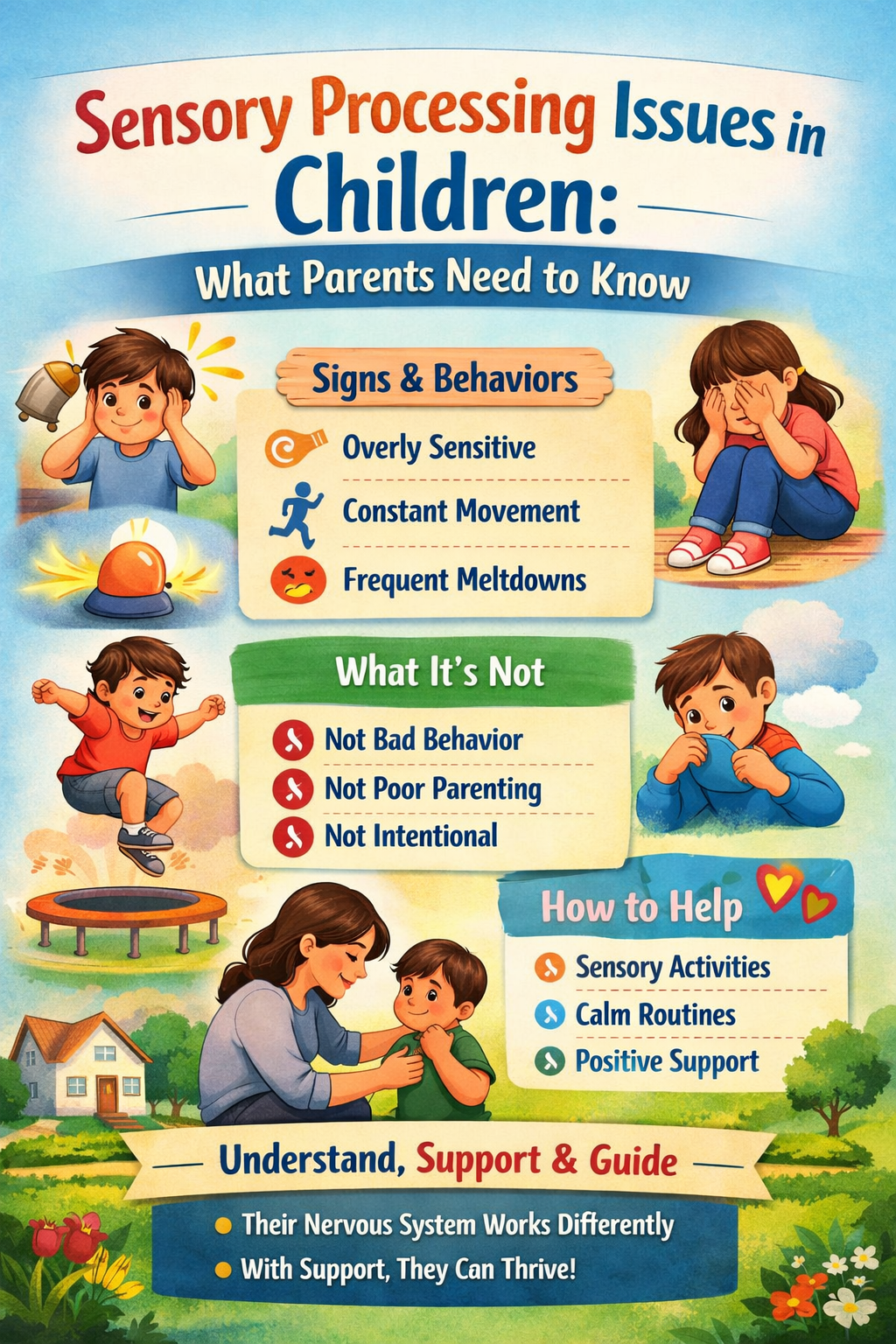
Sensory Processing Issues in Children: What Parents Need to Know
Many parents notice behaviors such as constant movement, sensitivity to sounds, or frequent emotional outbursts. However, these behaviors are often misunderstood. In reality, they may be signs of sensory processing issues in children. Therefore, understanding sensory processing is essential for effective parenting and early support.
What Are Sensory Processing Issues in Children?
Sensory processing refers to how the brain receives and responds to sensory input such as touch, movement, sound, and sight. When sensory processing issues in children are present, the brain may react too strongly or too weakly. As a result, children may struggle to regulate their behavior and emotions.
Moreover, sensory differences are neurological in nature. Therefore, they are not caused by poor parenting or lack of discipline.
Common Signs of Sensory Processing Issues in Children
Sensory-Seeking Behaviors
Some children actively seek sensory input. For example, they may run, jump, spin, or touch objects constantly. Consequently, these children often appear restless or overly active.
- Constant movement or difficulty sitting still
- Enjoyment of rough play or crashing into objects
- Chewing clothes, pencils, or toys
- Making loud sounds or excessive talking
Sensory-Sensitive Behaviors
On the other hand, some children become overwhelmed by sensory input. However, their reactions are protective rather than defiant. Therefore, understanding sensory processing issues in children helps prevent mislabeling.
- Discomfort with loud noises or bright lights
- Avoidance of certain clothing textures
- Strong reactions to touch
- Difficulty in crowded environments
Emotional and Behavioral Indicators
Sensory overload often affects emotions. As a result, children may experience frequent meltdowns or difficulty with transitions. Meanwhile, adults may incorrectly assume behavioral problems.
What Sensory Processing Issues in Children Are NOT
It is important to clarify common misconceptions. Sensory processing issues in children are not intentional behaviors. Furthermore, they are not signs of laziness or stubbornness.
- Not bad behavior
- Not poor parenting
- Not lack of intelligence
- Not deliberate misbehavior
How Sensory Processing Issues in Children Affect Daily Life
Sensory challenges influence daily routines. Consequently, learning, social interaction, and emotional regulation may be affected. Additionally, tasks such as dressing, eating, or sleeping may become stressful.
How Parents Can Support Sensory Processing Issues in Children
Establish Predictable Routines
Consistent routines provide security. Therefore, children with sensory processing issues in children benefit from structured schedules. Moreover, preparing children for transitions reduces anxiety.
Include Daily Sensory Activities
Sensory activities help regulate the nervous system. For example, outdoor play, jumping, or tactile activities can be very effective. In addition, short and frequent activities work better than long sessions.
Respond Calmly During Sensory Overload
During meltdowns, calm responses are essential. Instead of punishment, reduce stimulation and offer reassurance. Consequently, the child feels supported and safe.
Use Supportive and Respectful Language
Language plays a powerful role. Therefore, phrases like “Your body needs a break” help children feel understood. As a result, emotional trust is strengthened.
Supporting Sensory Processing Issues in Children at School
Collaboration between parents and teachers is crucial. Additionally, consistent strategies across home and school environments help children succeed. Therefore, open communication is strongly encouraged.
When to Seek Professional Support
If sensory challenges significantly interfere with daily functioning, professional guidance may help. However, seeking support does not mean labeling the child. Instead, it provides tools for growth and independence.
A Reassuring Message for Parents
Children with sensory processing issues in children experience the world differently. Nevertheless, with understanding and structured support, they thrive. Finally, empathy and patience create the strongest foundation for development.
Conclusion
Sensory processing issues in children are a natural part of neurodevelopmental diversity. Therefore, awareness is the first step toward meaningful support. Ultimately, the goal is not to change the child, but to support the child.
Frequently Asked Questions About Sensory Processing Issues in Children
What are sensory processing issues in children?
Sensory processing issues in children occur when the brain has difficulty receiving or responding appropriately to sensory information. As a result, children may overreact or underreact to touch, sound, movement, or other sensory input.
Are sensory processing issues in children a medical condition?
Sensory processing issues are considered neurological differences rather than a disease. However, they can affect daily functioning. Therefore, support strategies are recommended instead of punishment.
What causes sensory processing issues in children?
The exact cause is not always known. However, factors such as brain development, genetics, and early experiences may play a role. Consequently, every child presents sensory challenges differently.
How can parents identify sensory processing issues in children?
Parents may notice behaviors such as constant movement, sensitivity to noise, frequent meltdowns, or avoidance of certain textures. Therefore, observing patterns over time is more helpful than focusing on isolated behaviors.
Do sensory processing issues in children improve with age?
Yes, many children learn to manage sensory challenges as they grow. Moreover, with consistent support at home and school, improvement is often seen. Early understanding plays a key role in positive outcomes.
How can parents help children with sensory processing issues at home?
Parents can help by creating predictable routines, offering daily sensory activities, and maintaining a calm environment. In addition, responding patiently during emotional overload builds trust and regulation skills.
Should parents seek professional help for sensory processing issues in children?
If sensory challenges significantly interfere with learning, behavior, or daily routines, professional guidance may be beneficial. However, seeking help is meant to support development, not label the child.
Are sensory processing issues in children linked to behavior problems?
Sensory challenges may appear as behavior issues. However, these behaviors are often the child’s response to sensory overload. Therefore, understanding sensory needs helps prevent misinterpretation.