

Thoughtful Early Childhood Curriculum for Holistic Development
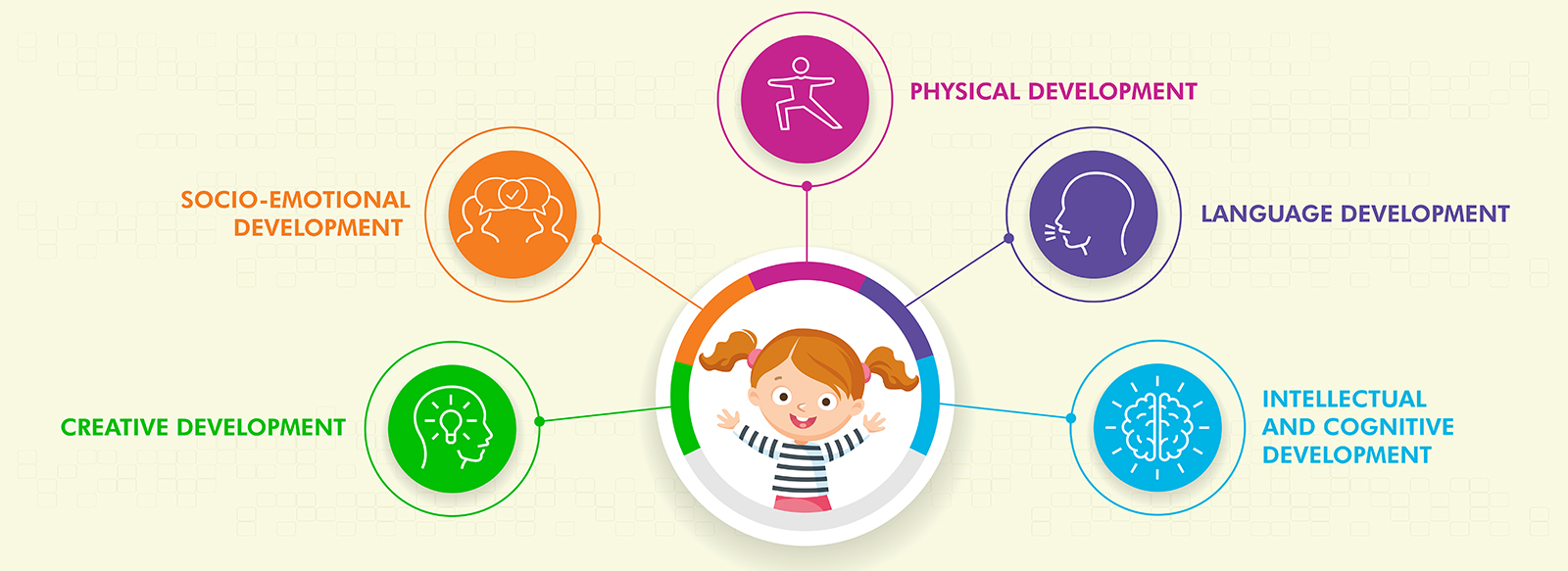
Designing a high-quality early childhood curriculum is more than just planning activities for toddlers—it’s about creating an environment that nurtures holistic growth. At the playgroup stage, children are developing emotionally, socially, cognitively, physically, and creatively. A thoughtfully structured curriculum ensures that every activity supports these areas while keeping learning fun, safe, and engaging.
Why Thoughtful Curriculum Planning Matters
Toddlers are naturally curious and absorb information quickly. A well-planned curriculum ensures:
Balanced Development: Emotional, social, cognitive, physical, and creative skills grow together.
Joyful Learning: Activities like stories, songs, and play make learning exciting.
Emotional Security: Children feel confident, safe, and supported in their environment.
Key Components of an Early Childhood Curriculum
1. Language and Communication Skills
Building vocabulary through rhymes, stories, and simple conversations.
Encouraging children to express needs and feelings in short sentences.
Listening and comprehension activities to enhance attention span.
2. Cognitive and Problem-Solving Skills
Recognizing colors, shapes, numbers, and patterns.
Simple puzzles, sorting, and matching games to build analytical thinking.
Exploration-based activities to spark curiosity and observation skills.
3. Social and Emotional Growth
Encouraging sharing, cooperation, and empathy in group activities.
Role-play and pretend play to understand emotions and social situations.
Gentle guidance for expressing feelings and handling conflicts constructively.
4. Physical Development
Gross Motor Skills: Running, jumping, climbing, and ball games.
Fine Motor Skills: Scribbling, drawing, threading, and block play.
Promoting healthy habits like handwashing, eating independently, and potty routines.
5. Creativity and Imagination
Art & craft activities such as coloring, painting, and simple crafts.
Music, dance, and rhythm games to foster self-expression.
Dramatic play with costumes and props to encourage imaginative thinking.
6. Sensory Exploration
Hands-on experiences with sand, water, and playdough.
Nature walks and observing seasonal changes to connect with the environment.
Safe experiments exploring textures, sounds, and objects.
Benefits of a Holistic Curriculum
A thoughtfully planned curriculum helps toddlers:
Build confidence and self-awareness.
Enhance cognitive, emotional, and social intelligence.
Develop curiosity, creativity, and a lifelong love for learning.
Transition smoothly into preschool and formal learning environments.
Sample Daily Schedule for Playgroup Kids
- Arrival & Free Play: 15–20 min
- Circle Time / Greetings: 10 min
- Story / Rhymes / Language Activities: 15–20 min
- Snack / Hygiene Break: 10–15 min
- Creative / Art Activity: 15–20 min
- Outdoor / Physical Play: 20 min
- Cognitive / Math / Sensory Activity: 15 min
- Wind-down / Goodbye Circle: 10 min
Creating a Safe and Stimulating Learning Environment
Age-appropriate furniture and non-toxic toys.
Soft mats and child-proofed classrooms.
Supervised outdoor play areas.
Ideal staff-to-child ratio: 1:6–1:8.
A thoughtfully planned early childhood curriculum ensures that every song, story, and activity contributes meaningfully to a child’s overall development. By balancing structured learning with exploration and play, children grow socially, emotionally, cognitively, and physically, laying the foundation for lifelong learning and success.